Node.js vs. Go vs. Rust: Which Backend Language Dominates in 2026?
In the fast-evolving world of backend development, choosing the right programming language can make or break a project's success. As we navigate 2026, three contenders stand out: Node.js (powered by JavaScript), Go (also known as Golang), and Rust. Each brings unique strengths to the table, from rapid prototyping to raw performance. But does one truly dominate? This blog dives into their features, benchmarks, use cases, and trends, drawing from recent data and real-world insights to help you decide. We'll explore why no single language rules them all, but each excels in specific scenarios.
Node.js: The Versatile Veteran
Node.js, built on Google's V8 engine, has been a backend staple since 2009. In 2026, it remains incredibly popular, especially for web applications. According to the Stack Overflow Developer Survey 2025, JavaScript (including Node.js) is used by over 60% of developers, making it one of the most widely adopted languages. Its event-driven, non-blocking I/O model shines in handling real-time applications like chat apps, streaming services, and APIs.
Pros:
- Huge Ecosystem: With npm boasting millions of packages, you can build full-stack apps quickly. Frameworks like Express.js and Nest.js speed up development.
- Developer Speed: JavaScript's familiarity from frontend work means shorter ramp-up times. TypeScript integration adds type safety without much overhead.
- Scalability: Handles high concurrency via async operations, ideal for I/O-bound tasks.
Cons:
- Performance Limits: Single-threaded by default, it struggles with CPU-intensive workloads. Garbage collection can cause pauses.
- Memory Usage: Less efficient than compiled languages, leading to higher cloud costs at scale.
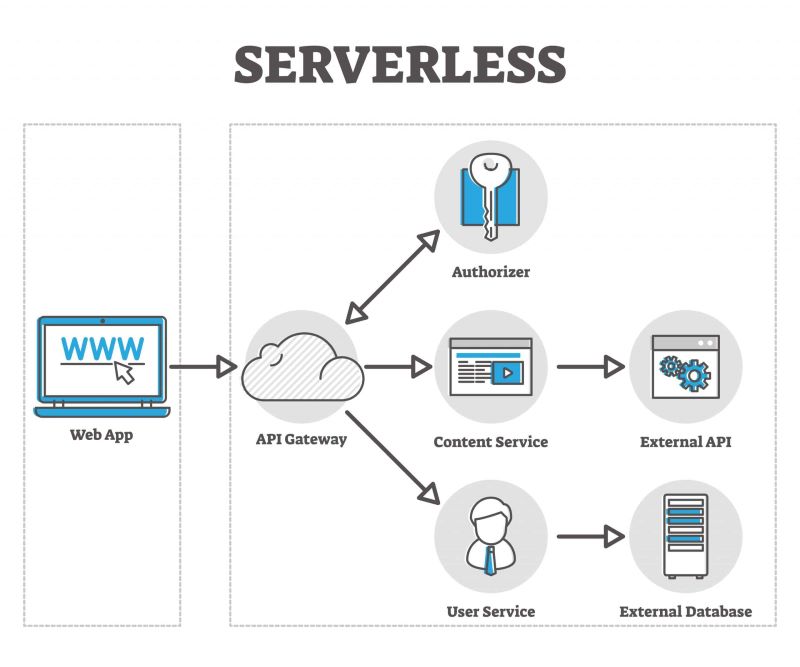
Use Cases in 2026: Node.js dominates in e-commerce platforms, social media backends, and serverless architectures on AWS Lambda or Vercel. Companies like Netflix and LinkedIn still rely on it for its ecosystem.
Go: The Concurrency Champion
Developed by Google in 2009, Go emphasizes simplicity, efficiency, and built-in concurrency. By 2026, it's a go-to for cloud-native apps, ranking in the top 10 on TIOBE and PYPL indices. Its goroutines and channels make handling thousands of concurrent requests a breeze, without the complexity of threads.
Pros:
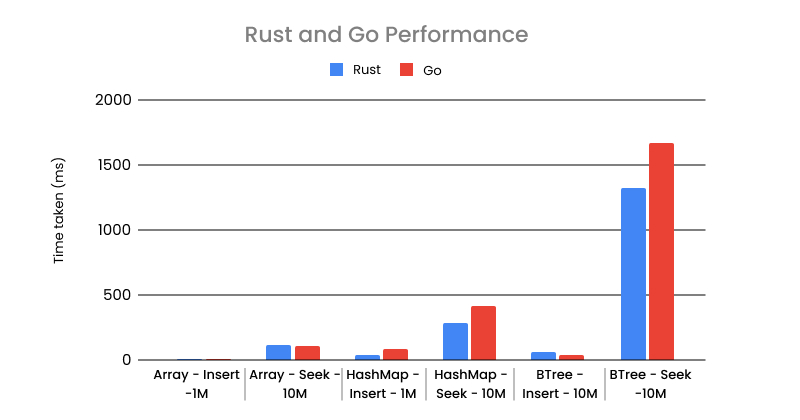
- Performance: Compiled to native binaries, Go offers low latency and efficient memory use. Benchmarks show it outperforming Node.js in API workloads by 2-3x.
- Simplicity: Minimal syntax reduces bugs and speeds up onboarding. Static typing catches errors early.
- Scalability: Excellent for microservices and distributed systems, with a small footprint perfect for Docker and Kubernetes.
Cons:
- Limited Libraries: Ecosystem is solid but smaller than Node.js. You might need to build more from scratch.
- Garbage Collection: Can introduce pauses in high-throughput scenarios, though tunable.
Use Cases in 2026: Go powers infrastructure at giants like Uber, Docker, and Cloudflare. It's ideal for APIs, networking tools, and DevOps automation. With AI integration rising, Go's speed makes it suitable for agent orchestration and microservices.

Rust: The Performance Powerhouse
Rust, sponsored by Mozilla since 2010, focuses on memory safety and zero-cost abstractions. In 2026, it's surging in popularity, topping Stack Overflow's "most admired" list for years with 72% admiration. Rust devs grew 180% YoY, per JetBrains data. Its borrow checker prevents common bugs like null pointers and data races.
Pros:
- Blazing Speed: Often 2-3x faster than Go and 5-10x faster than Node.js in benchmarks for HTTP servers and JSON handling.
- Memory Safety: No garbage collector means predictable performance, crucial for low-latency apps.
- Concurrency: Safe multithreading without fear of races.
Cons:
- Steep Learning Curve: Borrow checker and ownership model slow initial development. Compile times are longer.
- Maturing Ecosystem: Frameworks like Axum are strong, but less mature than Node.js or Go's.
Use Cases in 2026: Rust excels in systems programming, blockchain, embedded devices, and high-performance APIs. Discord migrated services from Go to Rust to eliminate GC pauses. It's gaining in web backends with 70% perf gains over Go.

Head-to-Head Comparison
To make sense of these, let's compare key aspects based on 2026 trends and benchmarks.
Performance
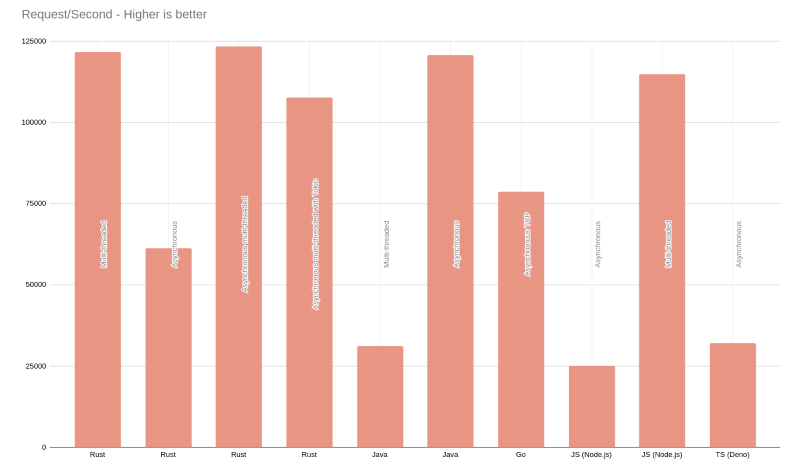
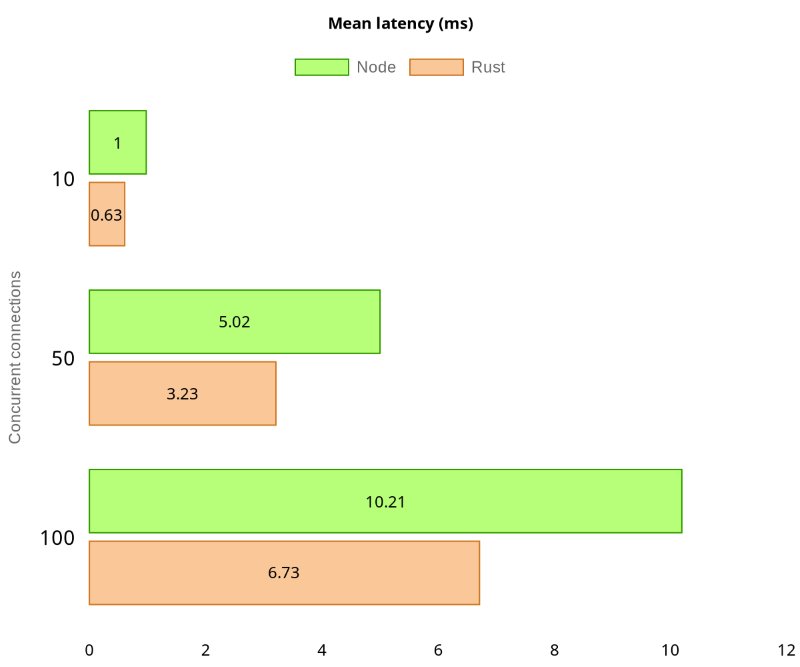
Rust reigns supreme. In HTTP server tests, Rust handles more requests per second with lower latency. Go follows closely, ideal for balanced workloads, while Node.js lags in CPU-heavy tasks but excels in I/O. For JWT verification and MySQL queries, Rust's mean latency is half of Node.js at high concurrency.
Developer Experience
Node.js wins for speed: Prototype in days with its vast libraries. Go offers quick iteration (1 week to productivity), while Rust demands 3 months due to its strictness. However, Rust's safety pays off in fewer runtime errors.
Ecosystem and Community
Node.js has the largest, messiest ecosystem. Go's is mature for backends, Rust's is catching up fast with crates like Tokio. Popularity-wise, JavaScript leads, but Rust's admiration signals future growth.
Scalability and Cost
All scale well, but Rust minimizes cloud bills with efficient memory. Go handles concurrency natively, Node.js via clusters. For ultra-scalable APIs, Go often edges out due to reliability.
Aspect Node.js Go Rust Performance Good for I/O Excellent Best Learning Curve Easy Moderate Steep Ecosystem Size Largest Mature Growing Best For Rapid Dev Microservices High-Perf Systems Conclusion: No Clear Dominator—Choose Wisely
In 2026, none truly "dominates" backend development; it depends on your needs. Node.js for quick shipping and full-stack synergy, Go for reliable concurrency in cloud environments, and Rust for unmatched performance where every millisecond counts. Trends show Rust rising fastest, but Go and Node.js hold strong market shares. Profile your workload, consider team expertise, and hybrid approaches—like Go with Rust hot paths—might be ideal. Ultimately, the best language is the one that solves your problems efficiently.