
Mastering Server-less APIs: Building Scalable Back-ends Without the Hassle
Hey there, fellow builder!
Picture this: It's 3 AM, your app just went viral on TikTok, and suddenly 10,000 users are hammering your API. In the old days, you'd be sweating bullets, frantically spinning up more EC2 instances, tweaking load balancers, and praying your server doesn't melt.
But what if your backend could auto-scale to millions of requests, charge you only for the milliseconds it actually runs, and let you ship features instead of babysitting infrastructure?
Welcome to the world of serverless APIs—where you write code, deploy it, and forget about servers entirely.
In this ultimate guide (yes, we're going deep—over 2,000 words of pure value), you'll master building scalable back-ends that handle anything life throws at them. We'll cover the why, the how, real code you can copy-paste today, pro tips, pitfalls, and success stories from companies crushing it right now.
Ready to ditch the hassle and level up? Let's dive in. 🚀
What Exactly Is Serverless Computing (and Why APIs Love It)?
Serverless isn't "no servers"—it's "no server management." Cloud providers (AWS, Azure, Google Cloud, etc.) handle the heavy lifting: provisioning, patching, scaling, and high availability. You just upload functions that run in response to events—like an HTTP request hitting your API.
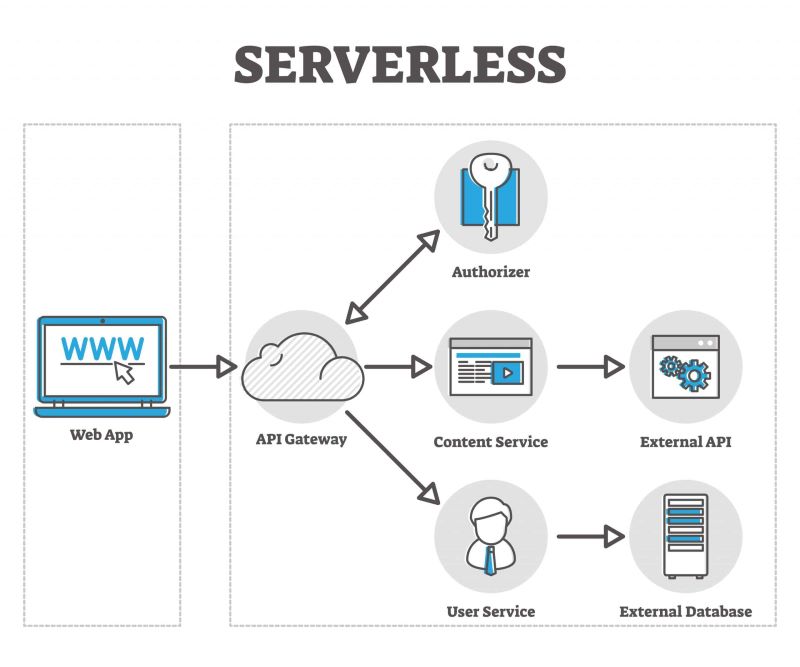
At its core, this is Function-as-a-Service (FaaS) combined with Backend-as-a-Service (BaaS) tools like databases and auth. For APIs specifically, you typically pair something like AWS Lambda (your code) with Amazon API Gateway (your front door) and DynamoDB (your data store).
Traditional servers? Always-on, over-provisioned, and expensive during quiet hours. Serverless? Pay-per-execution. A function that runs for 100ms costs fractions of a penny.
The market is exploding because of this: Serverless computing was valued at around USD 26-32 billion in 2025-2026 and is projected to hit USD 50-90 billion+ by 2030-2033, with CAGRs between 15-24% depending on the source.
Why the hype? Developers hate ops work. With serverless, you focus on business logic—the stuff that actually moves the needle for your users.
The Massive Benefits: Why Your Next API Should Be Serverless
Let's get real about the wins:
- Infinite Scalability: Handles 1 request or 1 million without you lifting a finger. Auto-scales in seconds.
- Pay-As-You-Go Pricing: No idle server bills. Netflix, for example, uses Lambda to transcode videos on demand—only paying when work happens.
- Lightning-Fast Development: Deploy in minutes. No OS updates, no SSH nightmares.
- Built-in High Availability: Multi-AZ by default. 99.99%+ uptime is the baseline.
- Easier Microservices: Break your monolith into tiny, independent functions.
Real talk: Companies report 50-80% cost savings and 2-3x faster time-to-market. Edmunds processed 50 million images in 8 days for just $6,000 using serverless—versus $10,000/month on traditional infra.
And it's not just cost. Security? Providers handle the underlying infra. Observability? CloudWatch and X-Ray give you tracing out of the box.
But it's not all rainbows. We'll tackle the challenges (and fixes) later. First, let's build something.
Choosing Your Battlefield: AWS, Azure, GCP, or Beyond?
AWS Lambda dominates for APIs (with API Gateway). Google Cloud Functions shine for event-driven stuff. Azure Functions integrate beautifully with Microsoft tools. For simpler starts, Vercel or Netlify offer "serverless" API routes if you're in the frontend world.
Pro Tip: Start with AWS if you're new—it's the most mature ecosystem for production APIs. We'll use it for our hands-on example.
Hands-On: Build a Scalable Todo API in Under 30 Minutes
Enough theory. Let's code a full RESTful Todo API using AWS Lambda + API Gateway + DynamoDB. We'll use Python because it's clean and readable (Node.js works identically).
This API will support:
- GET /todos → List all
- POST /todos → Create
- GET /todos/{id} → Get one
- PUT /todos/{id} → Update
- DELETE /todos/{id} → Delete
Step 1: Set Up Your Environment
- Create a free AWS account (or use existing).
- Install AWS CLI and SAM CLI (for easy local testing + deployment).
- Create an IAM role for Lambda with DynamoDB + CloudWatch access.
Step 2: The Lambda Function Code (app.py)
Here's the complete, production-ready code. One Lambda handles all routes via API Gateway proxy integration (simple for starters; we'll optimize later).
import json
import boto3
import os
from botocore.exceptions import ClientError
from uuid import uuid4
from decimal import Decimal  # DynamoDB uses Decimal for numbers

dynamodb = boto3.resource('dynamodb')
table = dynamodb.Table(os.environ['TABLE_NAME'])

class DecimalEncoder(json.JSONEncoder):
    def default(self, obj):
        if isinstance(obj, Decimal):
            return float(obj)
        return super().default(obj)

def lambda_handler(event, context):
    http_method = event['httpMethod']
    path = event['path']
    body = json.loads(event.get('body', '{}')) if event.get('body') else {}
    todo_id = event['pathParameters'].get('todo_id') if 'pathParameters' in event else None

    try:
        if http_method == 'GET' and path == '/todos':
            # List all todos
            response = table.scan()
            return {
                'statusCode': 200,
                'headers': {'Content-Type': 'application/json'},
                'body': json.dumps(response.get('Items', []), cls=DecimalEncoder)
            }

        elif http_method == 'POST' and path == '/todos':
            # Create todo
            item = {
                'id': str(uuid4()),
                'title': body['title'],
                'completed': body.get('completed', False),
                'created_at': str(boto3.client('sts').meta.endpoint_url)  # Use timestamp in prod
            }
            table.put_item(Item=item)
            return {'statusCode': 201, 'body': json.dumps(item, cls=DecimalEncoder)}

        elif http_method == 'GET' and todo_id:
            # Get one
            response = table.get_item(Key={'id': todo_id})
            if 'Item' in response:
                return {'statusCode': 200, 'body': json.dumps(response['Item'], cls=DecimalEncoder)}
            return {'statusCode': 404, 'body': json.dumps({'error': 'Todo not found'})}

        elif http_method == 'PUT' and todo_id:
            # Update
            table.update_item(
                Key={'id': todo_id},
                UpdateExpression="SET title=:t, completed=:c",
                ExpressionAttributeValues={':t': body['title'], ':c': body['completed']}
            )
            return {'statusCode': 200, 'body': json.dumps({'message': 'Updated'})}

        elif http_method == 'DELETE' and todo_id:
            # Delete
            table.delete_item(Key={'id': todo_id})
            return {'statusCode': 204, 'body': ''}

        return {'statusCode': 405, 'body': json.dumps({'error': 'Method not allowed'})}

    except ClientError as e:
        return {'statusCode': 500, 'body': json.dumps({'error': str(e)})}
Key Highlights:
- Uses environment variables for table name (secure!).
- Handles JSON serialization for DynamoDB Decimals.
- Proper HTTP status codes (REST best practice!).
- Error handling to prevent crashes.
Step 3: DynamoDB Table
Create a table named Todos with id as partition key (String).
Step 4: Deploy with AWS SAM (serverless.yml alternative)
Use this template.yaml for SAM (easiest deployment):
AWSTemplateFormatVersion: '2010-09-09'
Transform: AWS::Serverless-2016-10-31

Resources:
  TodoFunction:
    Type: AWS::Serverless::Function
    Properties:
      CodeUri: .
      Handler: app.lambda_handler
      Runtime: python3.12
      MemorySize: 256
      Timeout: 30
      Policies:
        - DynamoDBCrudPolicy:
            TableName: !Ref TodosTable
      Environment:
        Variables:
          TABLE_NAME: !Ref TodosTable
      Events:
        Api:
          Type: Api
          Properties:
            Path: /todos
            Method: ANY
            RestApiId: !Ref TodoApi

  TodoApi:
    Type: AWS::Serverless::Api
    Properties:
      StageName: Prod
      CorsConfiguration:
        AllowOrigin: "'*'"
        AllowMethods: "'*'"
        AllowHeaders: "'*'"

  TodosTable:
    Type: AWS::DynamoDB::Table
    Properties:
      AttributeDefinitions:
        - AttributeName: id
          AttributeType: S
      KeySchema:
        - AttributeName: id
          KeyType: HASH
      BillingMode: PAY_PER_REQUEST
Deploy with one command: sam build && sam deploy --guided
Boom—your API endpoint appears in the CloudFormation output. Test it instantly with curl or Postman:
curl -X POST https://your-api-id.execute-api.us-east-1.amazonaws.com/Prod/todos \
  -H "Content-Type: application/json" \
  -d '{"title": "Learn serverless", "completed": false}'
Scale test it—Lambda handles thousands of concurrent requests automatically.
Advanced Mastery: Beyond the Basics
Authentication: Add Amazon Cognito for JWT auth in API Gateway. Zero code changes in Lambda—just enable authorizer.
Cold Starts: The #1 complaint. Mitigate with Provisioned Concurrency (keep 5-10 instances warm) or use SnapStart (Java) / Graviton processors. For Python/Node, keep functions under 50MB and use warm-up pings if needed.
Observability: Enable X-Ray tracing + CloudWatch Logs. Set alarms for high error rates.
Multi-Region: For global users, use Route 53 latency routing + DynamoDB Global Tables.
Event-Driven: Trigger Lambdas from S3 uploads, SQS queues, or EventBridge for background jobs.
Best Practices & Common Pitfalls (Avoid These!)
Do This:
- Keep functions small and single-purpose (no "God Lambdas").
- Use IaC (SAM, CDK, Serverless Framework).
- Implement retries + dead-letter queues for reliability.
- Version APIs (v1/todos) and document with Swagger/OpenAPI.
- Monitor costs with AWS Budgets.
Avoid These:
- Monolithic functions → hard to debug and scale.
- Ignoring cold starts in latency-sensitive apps.
- Direct database calls without connection pooling (use RDS Proxy if needed).
- No error handling → 500s everywhere.
- Vendor lock-in fear? Use open standards like OpenAPI.
From industry wisdom: Consistent naming, proper status codes, and graceful errors are non-negotiable for REST APIs.
Real-World Wins: Who's Crushing It?
- Netflix: Lambda for video encoding pipelines and metadata updates.
- iRobot: Serverless powers smart home device management.
- Thomson Reuters: Processes 4,000 events/second for analytics.
- FINRA: Serverless for regulatory data validation—massive scale without ops team.
Startups save millions; enterprises move faster. Your turn!
Your Turn: Master Serverless Today
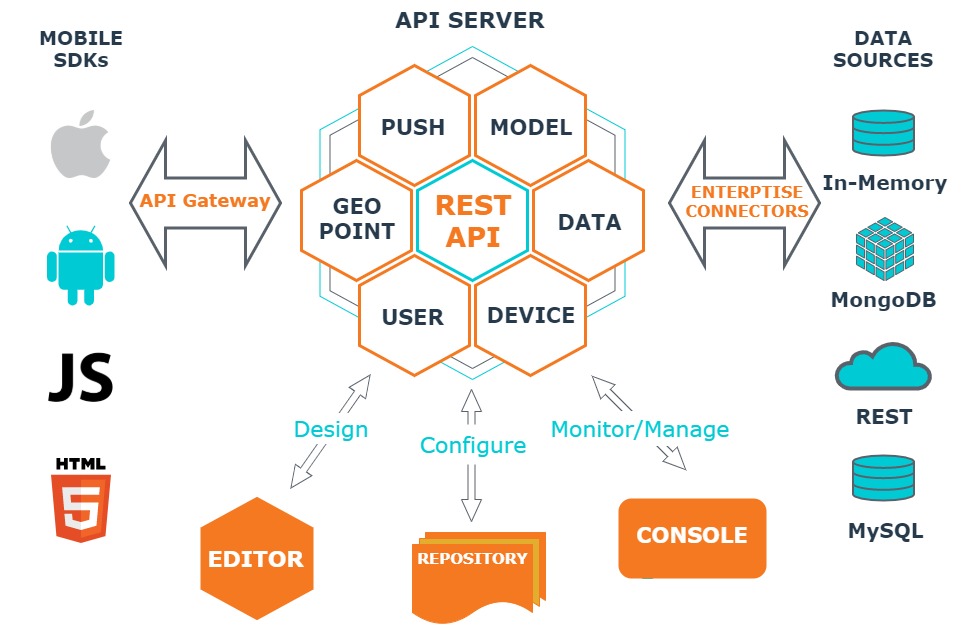
You've got the blueprint: theory, code, diagrams, and battle-tested advice. Deploy that Todo API right now—seriously, open AWS console and go.
Serverless isn't the future; in 2026, it's the smart default for scalable APIs.
What are you building first? Drop your project in the comments, share this post if it helped, and subscribe for more deep-dive dev guides (next up: CI/CD for serverless with GitHub Actions).
Questions? Hit reply—I'm here to help you ship faster.
Happy coding! 💻✨